The War of the Hoard
Vainqueur the DragonThe War of the Hoard is the defining first campaign of Murmurin’s imperial mythology: a war over treasure, loyalty, and the right to determine what the dragon way of life will mean. Furibon’s kidnapping of Victor Dalton turns a struggle over wealth into a rescue and succession crisis, while Vainqueur Knightsbane’s victory transforms Castle of Murmurin into his dungeon and elevates him into the ultra-prestigious Kaiser Class. The event survives not merely as history but as controlled history, written by Pink Ranger from Vainqueur’s account and repeatedly repackaged as proof of the emperor’s glory.
Causes and Background
The immediate crisis begins when Furibon kidnaps Victor Dalton, described in the official account as the first among all minions. Furibon’s evil is presented as spreading across the land and corrupting everything shiny, making the conflict unusually intimate for Vainqueur: the enemy has taken his most trusted servant and is attacking the material basis of his authority at the same time. The official chronicle therefore frames the war as both a rescue mission and a defense of the great hoard.
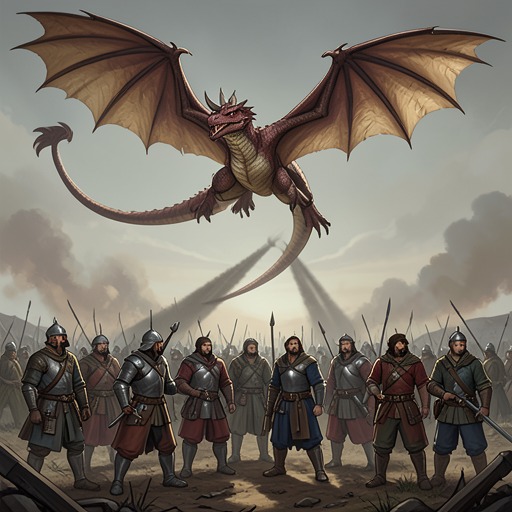
The campaign also gathers together forces that would otherwise be divided. A last alliance of Kobold Rangers and werewolves marches against Furibon’s armies, following Vainqueur toward the slopes of Murmurin Volcano. The alliance is politically and militarily important because the enemy is not confronted by Vainqueur alone; his kingship is displayed through his ability to make disparate monsters fight under one purpose. The master ring marks him as the leader of the desperate charge, while the hoard gives the coalition its common stake.
The conflict is later remembered as the First War of the Hoard, in contrast to Vainqueur’s claim that he also slew the Moth King during the Second War. That retrospective naming enlarges a single campaign into a historical sequence. Vainqueur presents both wars as part of his role as Defender of the Hoard, a title that makes protection of treasure sound like a civilizational duty rather than private accumulation.
Course of the Battle
The decisive assault targets Castle of Murmurin, whose magical barrier initially protects Furibon’s stronghold. Vainqueur activates the Perk Spell Purge, radiating a dark aura that causes the barrier to blink out of existence. He then crash-lands on the castle’s statues, destroying them and shaking the structure. The attack combines a rules-based supernatural ability with spectacular physical force: the system confirms the action, while the dragon’s body turns that confirmation into siege warfare.
Furibon is not simply overpowered in a straightforward exchange. Vainqueur successfully applies Taunt, inflicting the Berserk status on the lich. Furibon becomes too enraged to cast spells, so the dragon’s provocation removes the enemy’s most dangerous advantage. The battle consequently makes temperament itself tactical. Furibon’s fury, which fuels his evil and his resistance, is redirected against him until it becomes a disabling weakness.
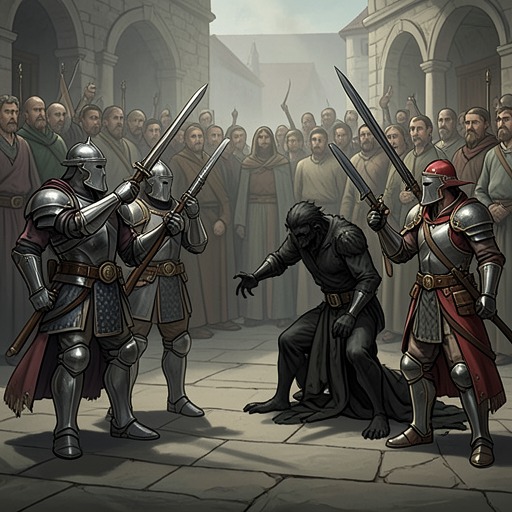
The final attack arrives from behind. Furibon’s own undead abomination catches the lich in its jaws, creating a grotesque reversal in which the enemy’s undead forces turn into instruments of his defeat. While the lich is trapped, Victor swings his blade and cuts off Furibon’s skeletal head. The rescue of the chief minion thus culminates in Victor’s direct participation in the killing blow rather than in a passive recovery by his master.
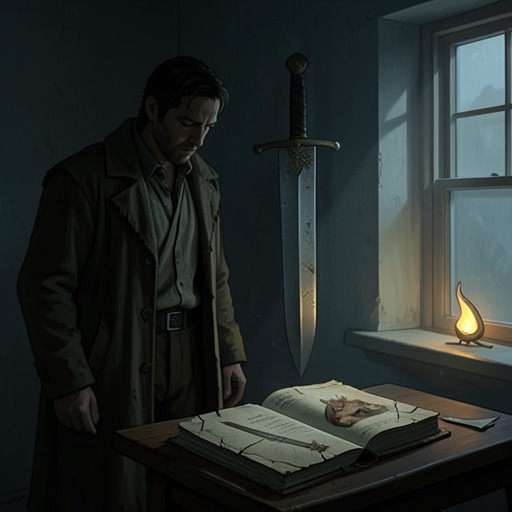
The victory has a further containment mechanism. Furibon is sealed inside Victor’s weapon instead of merely disappearing from the story. By imprisoning the lich in a minion’s blade, the victors convert a living military threat into a burden that remains physically attached to Victor. The system rewards this act of sealing Furibon, along with the claim of Castle of Murmurin as Vainqueur’s dungeon, by granting Vainqueur a level in the Kaiser Class.
Consequences and Aftermath
The war ends with Furibon’s destruction and peace returning to Murmurin. Vainqueur gathers a vast hoard in the depths of his castle, described as one hoard capable of binding them all. The phrase makes accumulation perform a political function: treasure is no longer only the object of conflict but the material center around which the restored order is organized.
Victor remains tied to the victory through punishment as well as honor. Because he was captured, he must carry the burden of keeping the pauper Furibon sealed. The arrangement preserves Victor’s status as first among the minions while making his service a continuing act of atonement. Furibon’s defeat therefore does not erase the cost of the war; it transfers the defeated enemy into an ongoing obligation.
Vainqueur’s relationship to his treasures follows the same logic of controlled generosity. He dislikes spreading the hoard beyond his sight, yet he agrees to loan weapons to the Kobold Rangers so that the beauty of the treasure will encourage them to work. Victor alone is considered worthy to wield the sacred items in battle because Vainqueur trusts him not to lose them. The war consequently strengthens a hierarchy in which equipment is loaned, service is rewarded, and every apparent gift creates dependence.
The campaign also becomes a mechanism for advancement within the Class System. Its rewards include Vainqueur’s Kaiser Class level, while earlier notices credit him with gaining Monster Squire levels for leading monsters fearlessly against superior opponents. These system announcements translate battlefield conduct into measurable status. Victory is simultaneously military success, political legitimacy, and a sequence of quantified promotions.
Official History and Repetition
Pink Ranger is assigned to write the glorious chronicles of the war. The account openly declares that Furibon was evil and had to be destroyed, and Pink swears that the version is the official truth, spoken through Vainqueur himself. This framing makes the chronicle part of the victory. The war is not only won on the battlefield; it is stabilized afterward through authorship, royal testimony, and the suppression of competing interpretations.
The official history is reproduced materially as well as verbally. Savoureuse gives an enemy the history of Murmurin, explaining that The War of the Hoard was transcribed from Vainqueur’s mouth by Pink Ranger and duplicated by mimic printing presses. The chronicle can therefore circulate through homes and across political boundaries, turning a local assault into public instruction about imperial greatness.
Vainqueur later orders Pink to write a new chronicle of The War of the Hoard about the defeat of Maure, calling it The Return of the Dragon and demanding that it be distributed to every home. The title treats later conquest as a sequel to the Furibon campaign, while the distribution plan turns memory into civic propaganda. When Blue Ranger sees another scroll and asks whether it is the sequel of The War of the Hoard, the response shows that the war has become a recognizable narrative brand.
The chronicle is not entirely stable beneath its official surface. Pink admits that she needed alcohol before writing about the lead event because its darkness and depth were difficult to commit to paper. Her confession exposes a gap between the polished public legend and the emotional or disturbing material required to produce it. The official story insists on Vainqueur’s glory, yet the scribe’s hesitation suggests that the war contains experiences the triumphant version cannot comfortably absorb.
Significance
The War of the Hoard is a rescue narrative, a siege, a revenge conflict, and a founding myth at once. Its value shift is stark: Victor moves from captured first minion to active executioner, Castle of Murmurin moves from defended enemy capital to Vainqueur’s dungeon, and Furibon moves from autonomous lich to sealed object of custody. Each reversal binds personal loyalty, territory, and treasure into one imperial victory.
The event also establishes the central paradox of Vainqueur’s rule. He calls himself Defender of the Hoard and claims to protect the dragon way of life from those who would turn it to lead, but his victory is secured through systems of classification, controlled loans, official chronicles, and obligations imposed on minions. The dragon order resists transformation into lead while becoming increasingly institutionalized itself.
Most pointedly, Furibon is destroyed by the obsession that powered his evil: hatred of gold. The outcome makes greed both the war’s moral contamination and its victorious principle. Once again, the forces of greed prevail, and the dragon way of life endures. The war’s heroic language thus carries an absurd but coherent logic: the hoard is worth defending because it defines the civilization, and the civilization is validated because it keeps the hoard under Vainqueur’s control.